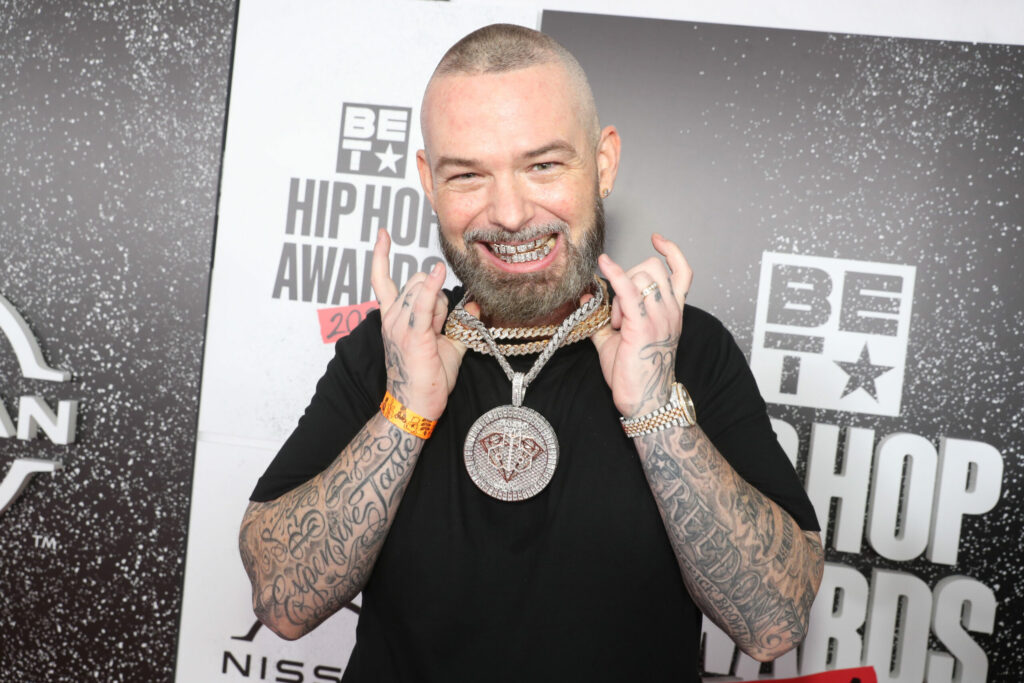
Paul Wall has been part of Houston hip-hop for more than two decades, building a career that combines rap music, touring, collaborations and an especially recognizable connection to custom jewelry. While many listeners first discovered him through songs such as “Sittin’ Sidewayz” and his appearance on “Grillz,” his story started years earlier in Houston’s independent mixtape scene.
Paul Wall has an estimated net worth of $2.5 million. Born on March 11, 1981, in Houston, Texas, he is 45 years old in 2026. His wealth has come from album sales, streaming, touring, guest appearances, independent music releases and business interests connected with custom grills and jewelry. More than 20 years after his mainstream breakthrough, Wall remains closely associated with the sound and culture of Houston rap.
Paul Wall Net Worth
Paul Wall’s net worth is estimated at approximately $2.5 million.
Unlike artists whose earnings depend mostly on a few mainstream albums, Wall has spent much of his career working across different parts of the music business. Record deals played an important role during his commercial peak, but independent releases, concerts, collaborations and merchandise have helped extend his career.
His jewelry connections have added another dimension to his business identity.
Wall became closely associated with customized grills, decorative dental jewelry typically made using gold, diamonds and other precious materials. His connection with jeweler Johnny Dang eventually developed into a business partnership.
Exact figures showing how much Wall earns from music compared with jewelry and other ventures are not publicly available. Still, his ability to remain active for decades has given him several potential sources of income instead of depending entirely on past record sales.
Growing Up In Houston
Paul Wall was born Paul Michael Slayton in Houston, Texas, on March 11, 1981.
Houston would become much more than his hometown. The city’s distinctive rap culture shaped his musical style and eventually became a major part of his identity as an artist.
Wall attended Jersey Village High School before enrolling at the University of Houston. He studied mass communications for several years, although music eventually became his priority.
Houston’s hip-hop scene was developing its own identity at the time.
The city’s chopped-and-screwed sound, car culture, mixtape economy and independent labels created opportunities for local rappers to develop loyal audiences without immediately depending on national exposure.
Wall became immersed in that environment.
Rather than trying to separate himself from Houston culture as his career grew, he leaned heavily into it. That decision eventually became one of the reasons his music was so recognizable when national audiences began paying attention.
Partnership With Chamillionaire
One of the most important relationships in Wall’s early career was his partnership with fellow Houston rapper Chamillionaire.
The two began recording together and looked for opportunities to get their music heard.
A major early connection came through Houston DJ and producer Michael “5000” Watts. Wall and Chamillionaire convinced Watts to let them perform on his radio program, helping introduce their music to a wider local audience.
They continued appearing on mixtapes and gradually developed a following.
Their growing popularity eventually resulted in a deal with Paid in Full Records.
In 2002, they released Get Ya Mind Correct. The collaborative album became an important regional success and reportedly sold more than 200,000 copies.
The project demonstrated that Houston artists could generate meaningful sales before becoming household names nationally.
Wall and Chamillionaire eventually moved in separate professional directions, but their early partnership played an important role in establishing both careers.
Finding Solo Music Success
Paul Wall began establishing himself as a solo artist during the early 2000s.
His first solo album, Chick Magnet, arrived in 2004. It helped strengthen his position within Southern rap, but his next major project would completely change the scale of his career.
The Peoples Champ arrived in 2005.
The album debuted at number one on the Billboard 200, giving Wall a level of national visibility that his earlier independent releases had not achieved.
“Sittin’ Sidewayz” became one of the signature tracks of his career. The song captured Houston’s car culture and Wall’s relaxed delivery, introducing listeners outside Texas to a sound that local audiences already knew well.
“Girl” became another successful single.
The album eventually received platinum certification, marking the commercial high point of Wall’s solo recording career.
Instead of abandoning the Houston sound that had built his audience, Wall carried much of that identity directly into mainstream hip-hop.
Grammy Recognition With Grillz
Another major career moment arrived through Wall’s appearance on Nelly’s “Grillz.”
The song also featured Ali and Gipp and became closely connected with the growing popularity of decorative dental jewelry in mainstream hip-hop.
For Wall, the collaboration made particular sense.
Grills were already part of his public image, and he was developing real business interests in the jewelry industry.
The track became a major commercial success and earned a Grammy nomination for Best Rap Performance by a Duo or Group.
Although Wall did not win the award, the nomination remains one of the biggest industry recognitions of his career.
It also helped connect two sides of his professional identity. He was both a rapper talking about grill culture and someone who was genuinely involved in selling customized grills.
Albums Beyond Mainstream Peak
Wall followed The Peoples Champ with Get Money, Stay True in 2007.
The album performed strongly on the R&B and hip-hop charts and included tracks such as “Break ‘Em Off” and “I’m Throwed.”
By this point, the music industry was beginning to change rapidly. Digital distribution, streaming and social media were gradually reshaping how rappers reached their audiences.
Wall continued releasing music rather than relying only on his mid-2000s success.
Fast Life arrived in 2009, followed by additional studio albums and mixtapes.
Projects such as #checkseason and The Po-Up Poet reflected his increasing independence. He released music through his own Paul Wall Music operation, giving him greater control over his output.
Later projects included Slab God, Houston Oiler, Bounce Backs over Setbacks, Mind over Matter and Subculture.
His independent period may not have produced the same mainstream chart numbers as The Peoples Champ, but it demonstrated the durability of the audience he had developed.
Houston Rap Remains Central
Paul Wall’s career has remained closely connected with Houston.
That is important because Houston hip-hop developed differently from the scenes in New York, Los Angeles or Atlanta.
Car culture, candy-painted vehicles, slabs, grills and chopped-and-screwed music became important elements of the city’s rap identity.
Wall incorporated those influences directly into his music and image.
His career emerged alongside other Houston artists who helped bring greater national attention to the city during the 2000s.
Even after mainstream hip-hop trends changed, Wall continued representing the regional culture that originally made him successful.
This authenticity has helped him maintain respect among Southern rap listeners long after his biggest commercial hits were released.
Building A Jewelry Business
Jewelry became one of the most interesting business chapters of Paul Wall’s career.
During the early 2000s, Wall became fascinated with custom grills created by Houston jeweler Johnny Dang.
Their relationship eventually became a partnership.
In 2002, Wall and Dang opened Smile on the Rocks inside a Houston shopping mall. The business focused on customized dental jewelry and helped connect the growing popularity of grills with Houston’s hip-hop community.
The timing was particularly strong.
As Southern rap gained national popularity, grills became increasingly visible in music videos, award shows and celebrity culture. Wall’s own public image became almost inseparable from them.
His music career gave the jewelry business enormous exposure, while his involvement with grills made his image more distinctive as a rapper.
Dang later expanded the operation significantly, and the pair continued to be publicly associated with Houston’s custom jewelry culture.
Their collaboration eventually included the standalone Johnny Dang & Co. operation.
Acting And Other Projects
Wall has experimented with opportunities outside conventional music releases.
In 2009, he appeared in the film I Hope They Serve Beer in Hell and contributed to music connected with the movie.
He also entered mobile gaming.
In 2011, Wall collaborated on Battle Rap Stars, a mobile game centered around competitive rap battles. He appeared as an in-game character who served as an important final opponent for players.
These projects never replaced music as the center of his career, but they showed his willingness to explore other areas of entertainment.
Wall has also toured extensively over the years.
Touring can be particularly important for artists with loyal long-term audiences because older songs continue generating value through live performances even after their original chart runs have ended.
Marriage To Crystal Wall
Paul Wall married Crystal Wall in 2006.
The couple has two children together and has generally maintained a more private family life compared with Paul’s highly visible music career.
Crystal has developed her own public profile around fitness, wellness and entrepreneurship.
The couple’s relationship stretches back to before some of the biggest moments of Paul’s mainstream career, including the period when The Peoples Champ turned him into a nationally recognized rapper.
Houston has remained an important home base for the family.
Paul’s connection to the city extends through his music, friendships, business interests and personal life, making Houston an unusually consistent part of his story.
How Paul Wall Built Wealth
Paul Wall’s estimated $2.5 million net worth represents a career built through much more than one successful album.
The Peoples Champ gave him his biggest commercial breakthrough, while “Sittin’ Sidewayz” became a defining record of the Houston rap movement. His contribution to “Grillz” brought additional mainstream attention and a Grammy nomination.
But Wall’s ability to remain active is equally important.
He continued releasing albums and mixtapes after his major-label peak, increasingly embracing independent music while collaborating with artists from different generations.
At the same time, his involvement in the custom grill business gave him an entrepreneurial identity that fit naturally with his music.
At 45, Paul Wall remains a recognizable figure in Southern hip-hop. His career may have started with Houston mixtapes, but it developed into something much broader, covering platinum-selling music, touring, jewelry and independent projects.
His estimated $2.5 million fortune only tells part of that story. Wall’s larger achievement has been maintaining a career for more than two decades without separating himself from the Houston culture that helped make him famous in the first place.